
AI training for teams
AI training your teams will actually use.
Hands-on training on ChatGPT, Microsoft Copilot, Claude and your own assistants. By role, with your real tasks, and with clear rules for safe use.
- Practice with your own tasks
- In-house or remote
- Record of participation for AI literacy
ModuleFor
- AI basics and safe useAll staff
- Prompting for daily workSpecialist teams
- AI strategy and rulesManagement
- Copilot and ChatGPT setupIT
- Build your own assistantPower users
Each session recorded for your AI literacy documentation
Trusted by







The problem
Everyone has AI. Few know how to use it well.
Licences, no habits
Copilot or ChatGPT licences are bought, but after the first weeks most people go back to the old way.
Risky use
Customer data and contracts end up in prompts, because nobody explained what is allowed.
AI literacy is required
Under Article 4 of the EU AI Act, companies that use AI must ensure their staff have sufficient AI literacy. This applies since February 2025.
Training modules
Training by role, on the tools you use.
AI basics for all staff
What AI can and cannot do, typical mistakes and how to check a result.
Prompting for daily work
Writing, summarising, analysing and researching with your real tasks and documents.
Data protection and safe use
What may go into a prompt, which tool for which data and your internal rules.
AI for management
Where AI pays off, how to set rules and how to lead teams that work with agents.
Copilot and ChatGPT for IT
Setup, permissions, data access and support for the tools you roll out.
Build your own assistants
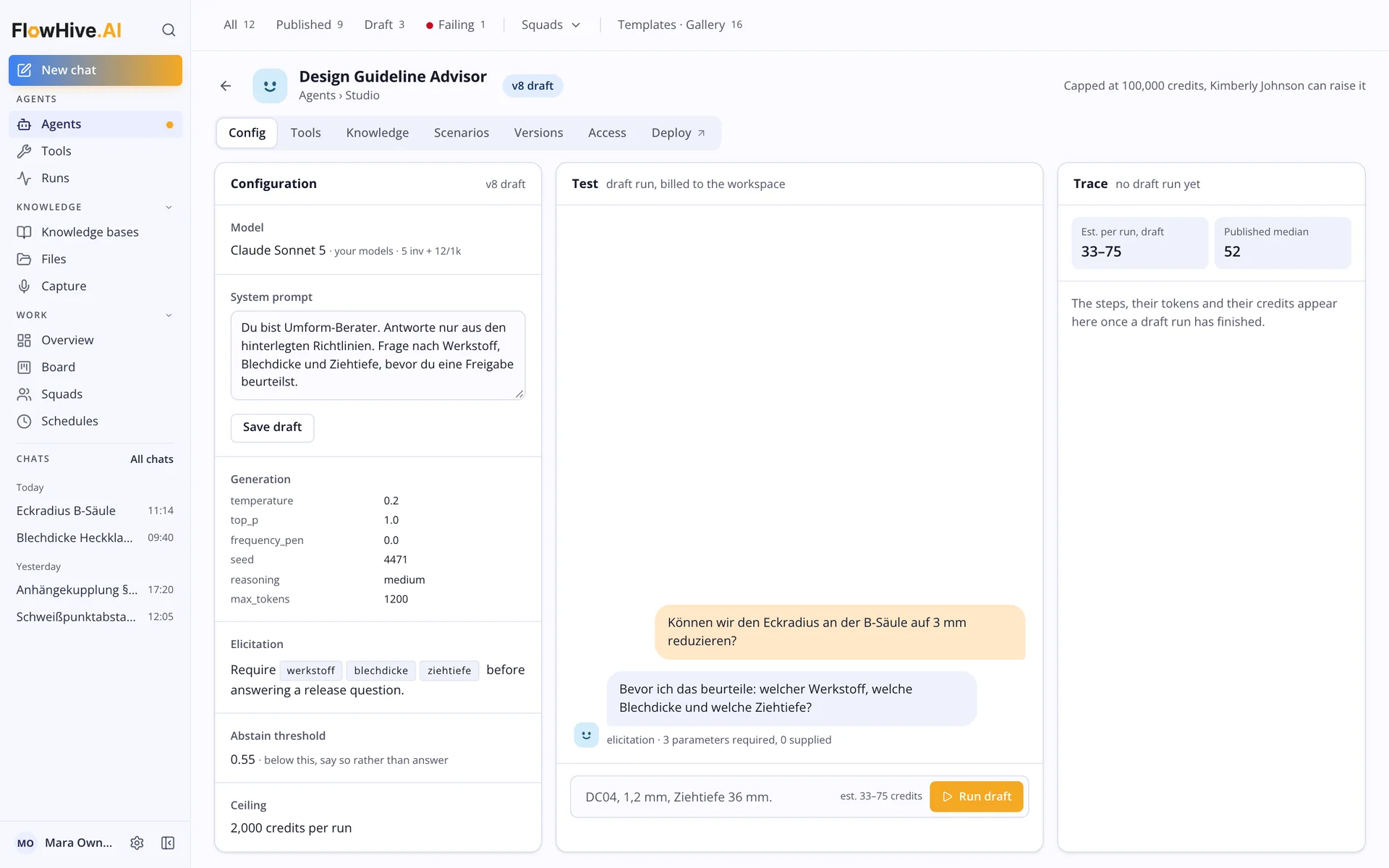
Power users learn to build assistants and simple agents, for example in FlowHive.ai.
What changes
From licences to daily habits.
- Staff use AI for real tasks and know what they may put in.
- Managers know where AI helps and set clear rules for their teams.
- The company has documented AI literacy instead of an open question.
Plan a training for your team.
Book a 30-minute callAI literacy
Training that counts for Article 4.
Article 4 of the EU AI Act asks companies that use AI to ensure sufficient AI literacy of their staff, matched to their role. We tailor the content to the roles and tools in your company and document who took part in what. This is training, not legal advice.
- Content by role and tool
- Participants and topics documented
- Material your team can reuse
- Refresher sessions when tools change
How it works
From first call to trained teams.
- 1
Call
30 minutes on your teams, tools and goals. Free of charge.
- 2
Plan
Modules per role, in-house or remote, half-day or full-day workshops.
- 3
Train
Hands-on sessions with your real tasks, plus material and a participation record.
- 4
Anchor
Train-the-trainer and follow-up sessions so the skills stay in the company.
Getting started
Start with one team workshop.
Pick one team and one tool. We run a hands-on workshop with your real tasks and show you what a company-wide plan would look like.
Book a 30-minute call- Workshop with your team and your tools
- Prompt examples for your daily work
- Short rules for safe use
- Record of participation
- Proposal for the next roles
Frequently asked questions
Is AI training mandatory for employees?
Article 4 of the EU AI Act requires companies that provide or use AI systems to take measures so that their staff have sufficient AI literacy. It applies since 2 February 2025. Training is the most common measure. For legal questions on your specific case, ask your legal advisor.
Which tools do you train on?
The tools your teams actually use, for example ChatGPT, Microsoft Copilot, Claude or FlowHive.ai. We adapt the examples to your tasks.
Do you train in-house or remotely?
Both. In-house workshops work well for hands-on practice, remote sessions for spread-out teams.
Do participants get a certificate?
Participants get a record of participation with the topics covered, which you can use for your AI literacy documentation. It is not an official certification.
What does AI training cost?
It depends on the number of groups, roles and sessions. After a first call we propose a plan with a fixed price.
Can our own people run the training later?
Yes. In train-the-trainer sessions we prepare internal colleagues to run the basics and answer questions themselves.

Let's plan your AI training.
30 minutes on your teams, your tools and what they should be able to do afterwards.
Dr. Marcel Müller · Founder & COO, JadenX