The AI Pyramid: How Far Public Models Get You and Why Enterprises Lag Behind
October 14, 2026

Enterprises are one to one and a half years behind freelancers, and how you use the public frontier models matters more than which models you can get access to
Image by the author.
People use AI on very different levels, and if you look at it from the bottom up it looks a lot like a pyramid, with a lot of people at the bottom who have never really used it and a tiny group at the top who work with models nobody else gets. What I see in my work is that the public frontier models you can use today already get you very far, close to the top actually, and where you end up on that pyramid depends a lot more on how you use these models than on what access you have. That was also part of a discussion Andrej Karpathy started this week on social media [1], and it got millions of views in a few days. I think he's right on most of it, so I want to go through his post with you level by level and give you my take, because I see the shape a bit differently than he does, with a top that splits into two parts.
Karpathy writes that the gap is now "less 'two groups of people speaking past each other' and more a sharp funnel." His simple math goes like this. Around 6 billion people "have barely come in contact with LLMs at all." Around 1 to 2 billion are "casual and infrequent users of free-tier ChatGPT-like products," and this group "sees derpy chatbots and treats them a bit like a better Google search," and he puts "even many professionals outside of math&code" in there too, execs included, who understand it intellectually but only second-hand. Then come around 20 million people who use frontier-grade LLMs professionally in math and code and "see first-hand that large, complex projects that used to take them weeks/months can now be completed by agents with a prompt." And at the very top he puts the roughly 5,000 people "with access to frontier-grade systems internally," where it looks like "swarms of thousands of agents collaborating over weeks on software mega projects" [1].
He also explains why it has that shape, and the part I find most useful is that capability "peaks" in work that is digital and can be checked automatically, and that also makes the labs money, on top of the plain question of which access tier you are on.
I agree with most of what Karpathy is saying. I'd just call it a pyramid of different users, since every level is a smaller group standing on the one below, and I'd divide the last part of his funnel into two. For me there is a real difference between the people who use the current public frontier models and the people inside the labs who use internal mega models that go in the direction of AGI, which here simply means models a lot stronger than anything you can get access to, whatever you want to call that. That gives you five levels, and I'll go through them with you from the bottom up.
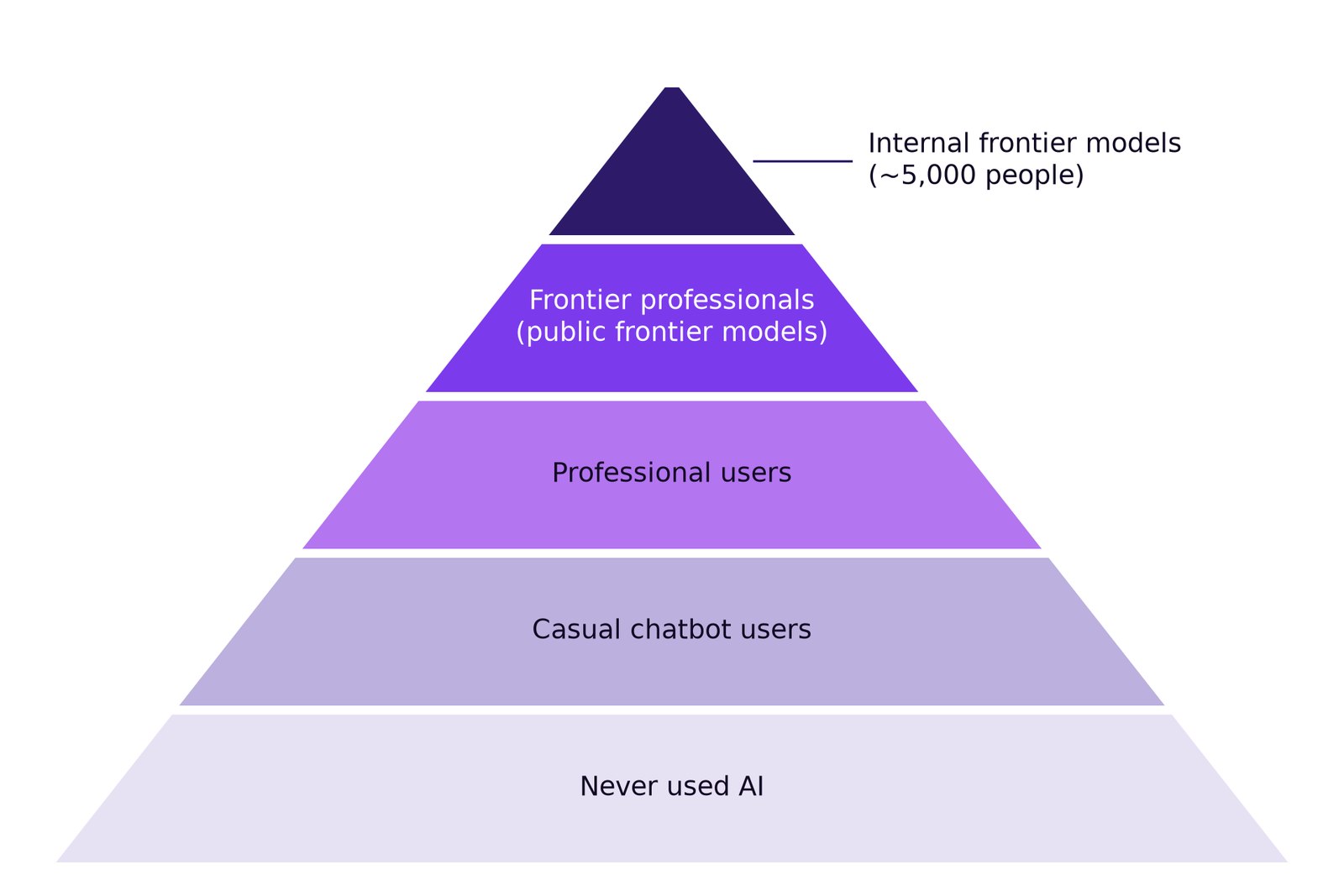
Image by the author.
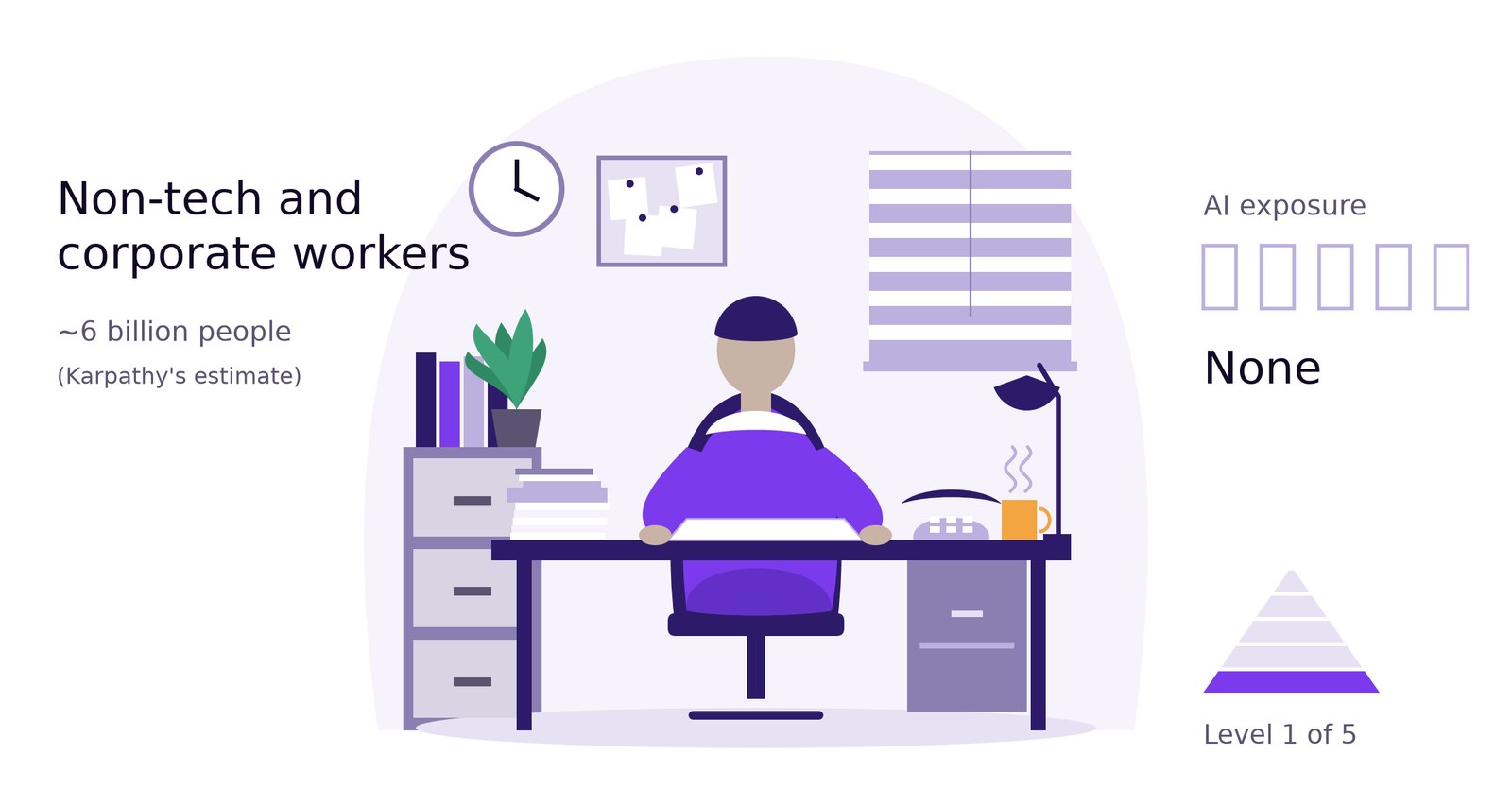
Image by the author.
I come originally from a non-tech background. I grew up in a bakery in a very rural part of Germany, and I'll take that very tiny population as my example here. Especially when we are talking about normal jobs there, not the higher paying jobs, people usually haven't really been in contact with anything at all. I'm not talking about jobs that make you a hundred thousand euros, and for reference, a hundred thousand euros is a lot of money in rural Germany. In Silicon Valley maybe not, but where I'm from it is. What people there know about AI is mostly what they read in the tabloids, in the German Bild-Zeitung, about all of the AI craziness and AI drones, and so they are a little bit intimidated by it, which I honestly understand.
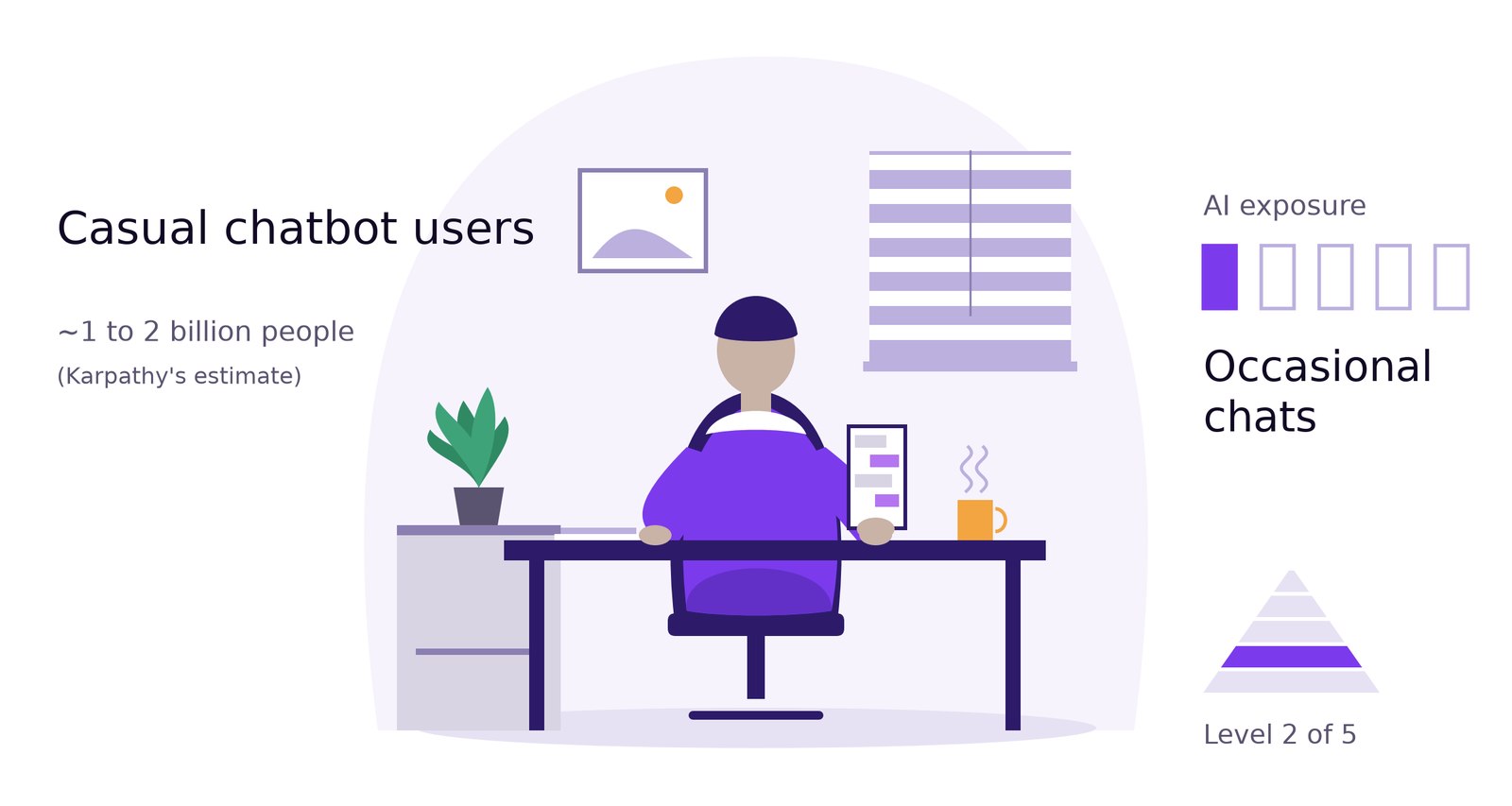
Image by the author.
Then you have a bunch of people, usually in their thirties or forties, who used ChatGPT at some point in time. When we're talking just about ChatGPT, I would also say about 20% of the people in my home area have been there, which is close to Karpathy's number. Of course that's my own anecdotal sample, and I have a lot of people from the high-tech field in my normal social circle, so this is far from the world population, though just where I'm coming from it seems kind of reasonable. For most of them AI is the derpy chatbot Karpathy describes, something they asked a few things once.
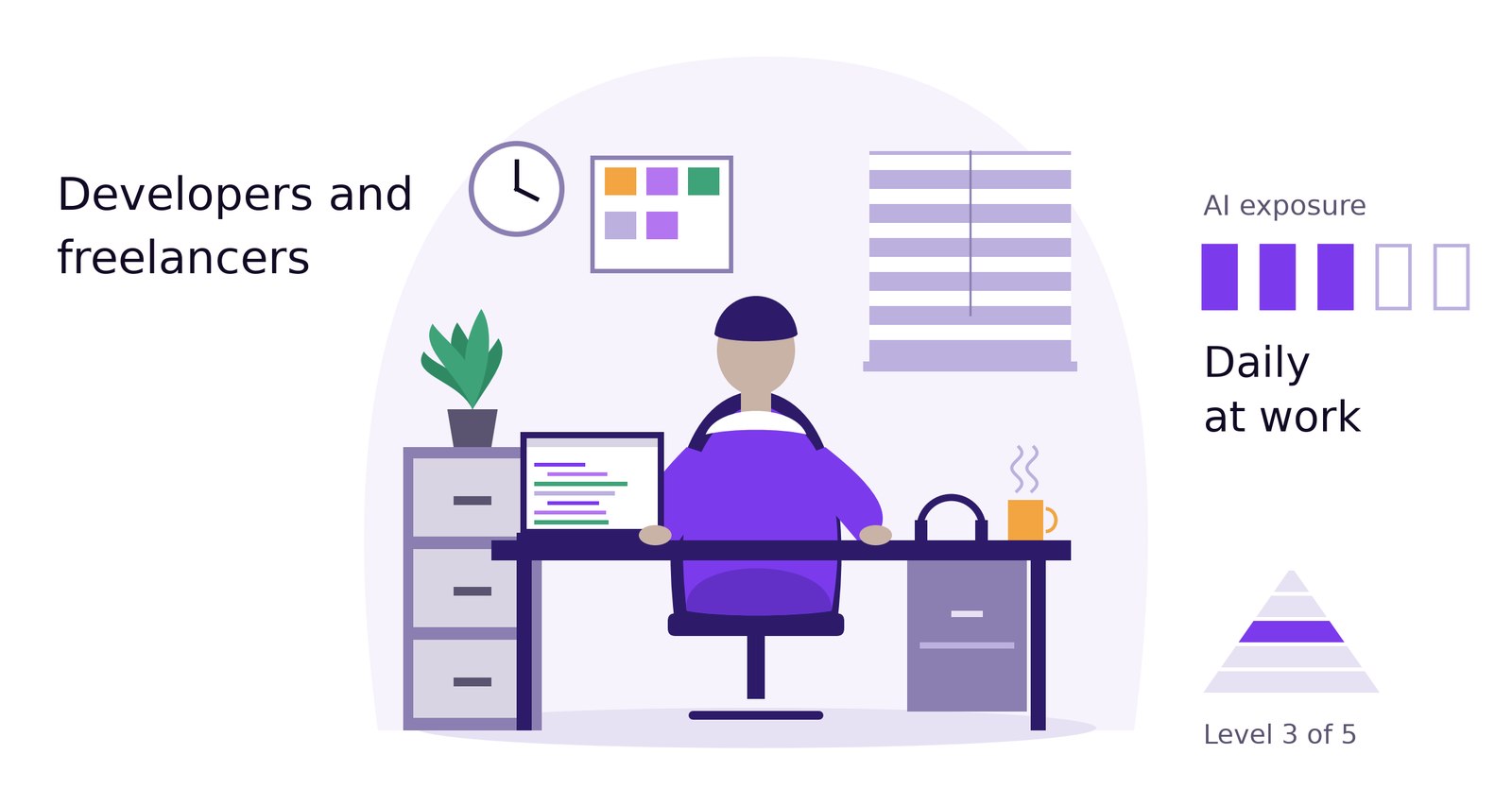
Image by the author.
The third level is professional users. I daily interact with a lot of developers and coders, and usually the good ones have all used LLMs and are getting step by step pretty good at using them, at least for coding. I also spend a lot of time with freelancers, and when they don't have any restriction they just go and use it and find good application areas for it. It's not like they need to go through fifteen different courses and some upskilling program first, they read articles and try things until they get to where they need to get to get value for them. For me that's one of the key points in this whole topic, the big difference between enterprises on one side and startups and self-employed people on the other.
I'm doing a lot of consulting gigs with JadenX, also for larger enterprises, and what I have seen is that in enterprises and regulated enterprises people are usually one to one and a half years behind in what they use and how good they are at it, compared to the absolute cracks I have in my day-to-day circle, my people on X and my friends. And I'm not even comparing them to the 5,000 at the very top here, I mean good people who are using these models to a decent extent and who find value in that.
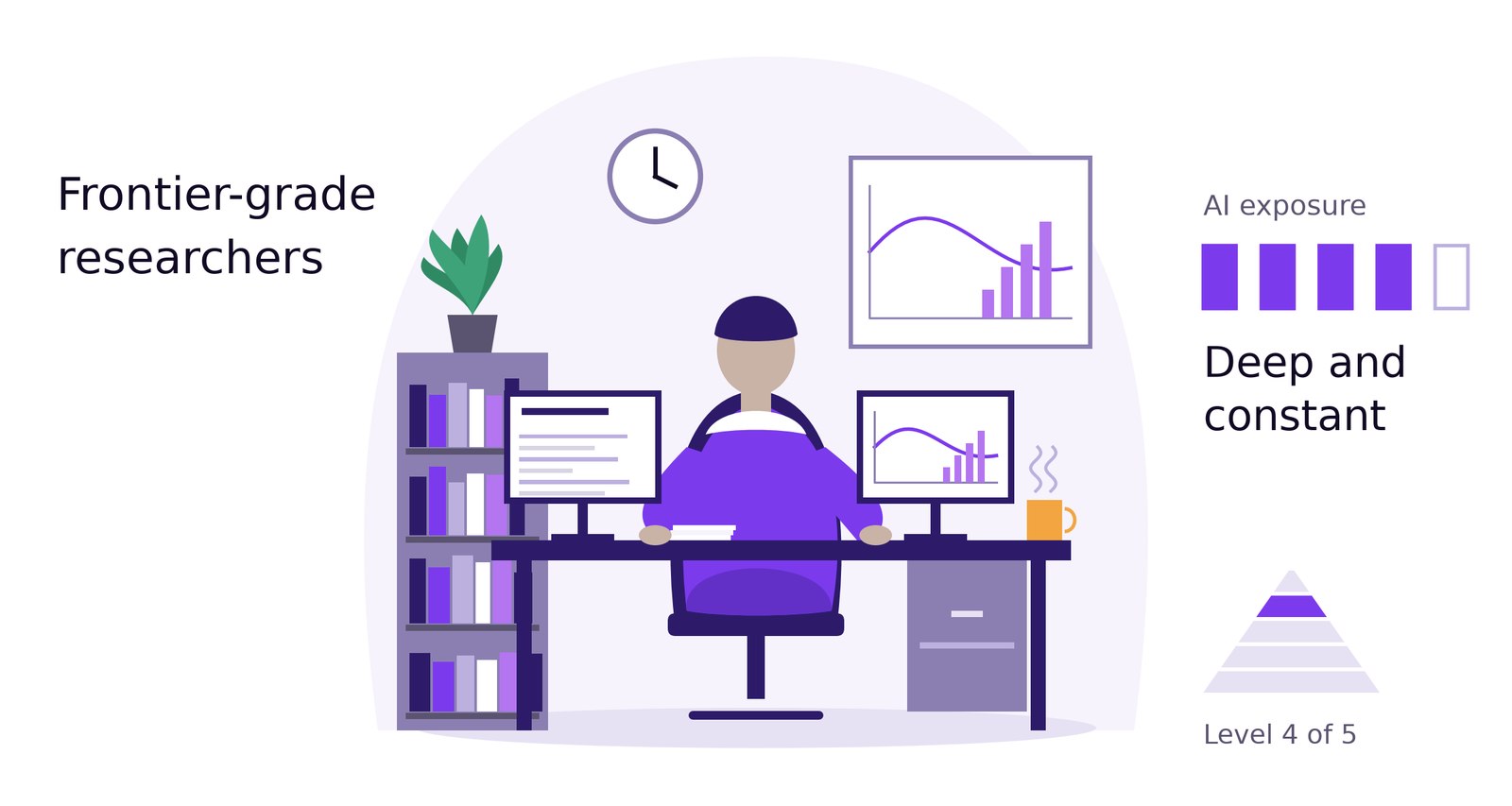
Image by the author.
Karpathy's top level is where you get the software mega projects, the zero days (security holes nobody has found and patched yet), cyber attacks and defenses at machine speeds and new science. But there are also people who are doing really frontier-grade science with LLMs while they're not in one of these big organizations, and that's the level I'd add. I have a background in academia, and there are quite a few people in my network who are completely outperforming other people in academia on quality and on pace, because they know how to use LLMs quickly in their academic workflows. I'm not talking about papers that are slop, meaning low-quality text a model churned out, put together in ChatGPT and then submitted to journals for nothing. I mean people who use these models properly in their research, and they do it quite successfully, while usually the other 80% in these areas say oh no, I can't do that.
In my opinion that's mostly not an AI issue for stuff like the social sciences, or even for computer science on the application level, because the publicly available models out there are enough to do frontier-grade science there. In a lot of the science today where you're working statistically, there's a great benefit right now if people use it correctly. I'm not so much into writing papers myself anymore, but I'm in contact with quite a lot of people who do that and who get something out of it.
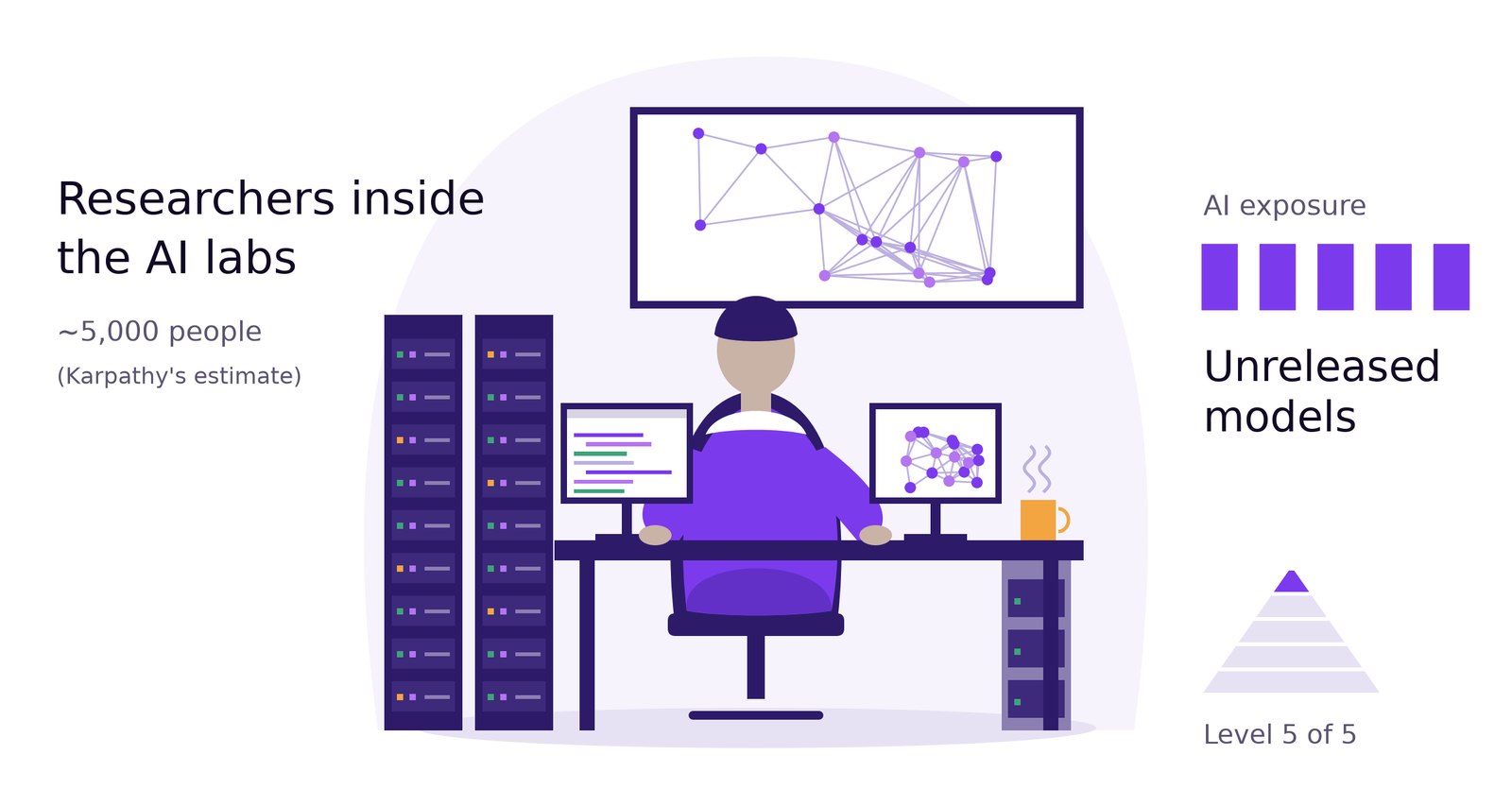
Image by the author.
Then there is the very top, the roughly 5,000 people Karpathy talks about who have the best models in the world, internal mega models going in the direction of AGI. If you're trying to settle P vs NP, one of the big open problems in computer science, or if you're trying to find zero days at scale, then of course you need stronger models than the public ones. That part is real and I'm not saying Karpathy is wrong about it, I just think that most of the work that matters for you and me happens one level below.
What I would really like to recommend to everybody here is driving towards the second to last level. You can't influence which models you get access to, that's unfortunately in the hands of very few centralized players, with governments and politics also playing in there. But there are very, very powerful models out there that you can use today in your workflows and to do science, and to make this world a better place, as strange as it sounds. So use them and get there, there's nothing that should prevent you from that. Yes, you probably won't find the biggest security issues in the world with them before anyone else does, but you can make scientific impact on a very good level, and the same goes for your daily work.
If you want to talk about where you or your company stand on this pyramid, just reach out to me via JadenX.
[1] Andrej Karpathy, post on X about the widening gap in shared understanding of LLM capability, 11 Oct 2026. https://x.com/karpathy/status/2109361546505966046. On 14 Oct 2026 it had about 6.35 million views and 42,800 likes, and the Hacker News discussion [2] had 716 points. Karpathy's own shares of the world population, which he calls napkin math: about 75% for the 6 billion, about 20% for the 1 to 2 billion, 0.2% for the 20 million and about 0.00006% for the 5,000.
[2] Hacker News discussion of the post, accessed 14 Oct 2026. https://news.ycombinator.com/item?id=50047422
About this article: I dictated my take on Karpathy's post, and an AI agent turned the dictation into this draft, which I then edited. AI agents also helped with the research, collecting the post, the Hacker News discussion and the engagement numbers. The opinions are mine.
This article was first published on Medium.
If you're figuring out where your team sits on this pyramid, or you want public frontier models to make a real difference in your processes, talk to me at JadenX.